
Quality & Reliable Excavating Contractor.
Planning a dig on a Plymouth, MI lot? Send the depth, the route in, and the finish you want, and the estimate will follow from them.
Call, or use the quote form and attach a few pictures of the lot, and we will arrange a visit before a machine is booked.
Free Fast Quote
Please fill out this form to request a free quote for your excavation project and we will respond to you right away!
Excavation Plymouth, Michigan
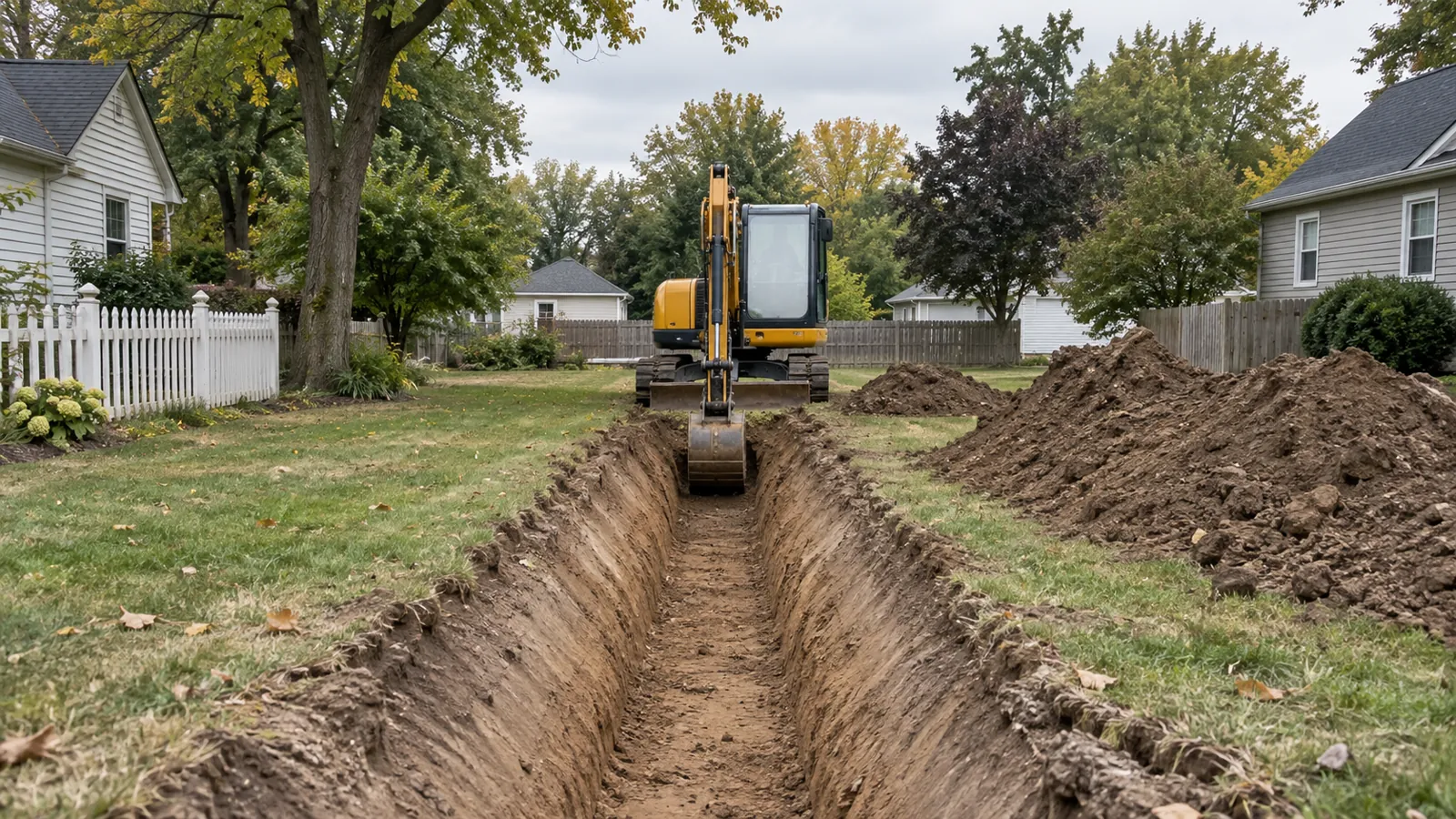
Excavation Plymouth, Michigan often means digging close to things that have to stay put, such as a neighbor's fence, a shared drive, a mature tree, or a street the trucks must share. Usually the first question is how a machine gets to the work area and where the soil goes afterward.
Excavation Plymouth, Michigan covers the digging, grading, drainage, and utility work planned around a single parcel, from one footing trench to a full building site.
Plymouth requests usually sort into a few kinds of work. A house or addition needs a basement or footing dig, a service line needs a trench, a wet lawn needs a drain, and a parcel with no sewer service may need a septic field. Each ends on a different surface and answers to a different office, so say which one you have.
Plymouth Township is a different jurisdiction from the City of Plymouth, so settle which of the two covers the parcel before anyone talks about permits. Next, measure the drive or gate and note the fences, overhead wires, and trees along the route, plus the room a truck has to turn. Those details choose the machine and decide how soil leaves the site.
What the ground is doing matters as much as what the plan says. A hard freeze or a wet thaw can limit how deep a crew can dig, and a low spot that holds water may need a pump while the hole is open. Fill left from earlier work can hide old footings or buried debris. If the parcel sits near a stream, pond, or wetland, raise it early, since state review may apply.
Before you call, collect the address, a few photos that run from the street to the work area, a survey or plans if they exist, and the deadline set by the next trade. With that in hand, the crew can size the machine and the schedule to the lot instead of guessing.
An excavation crew in Plymouth owes you three answers before it starts: how it reaches the work, where the spoil will sit, and how the ground looks when it leaves. The twelve cards below take the usual jobs one at a time and name the decision each one forces. Whichever excavation company near me you pick from a long list of search results, it will ask the same few questions, so answer them in your first message. Excavation Plymouth, Michigan comes together fastest when the first message ties each job to its access and its finished surface.
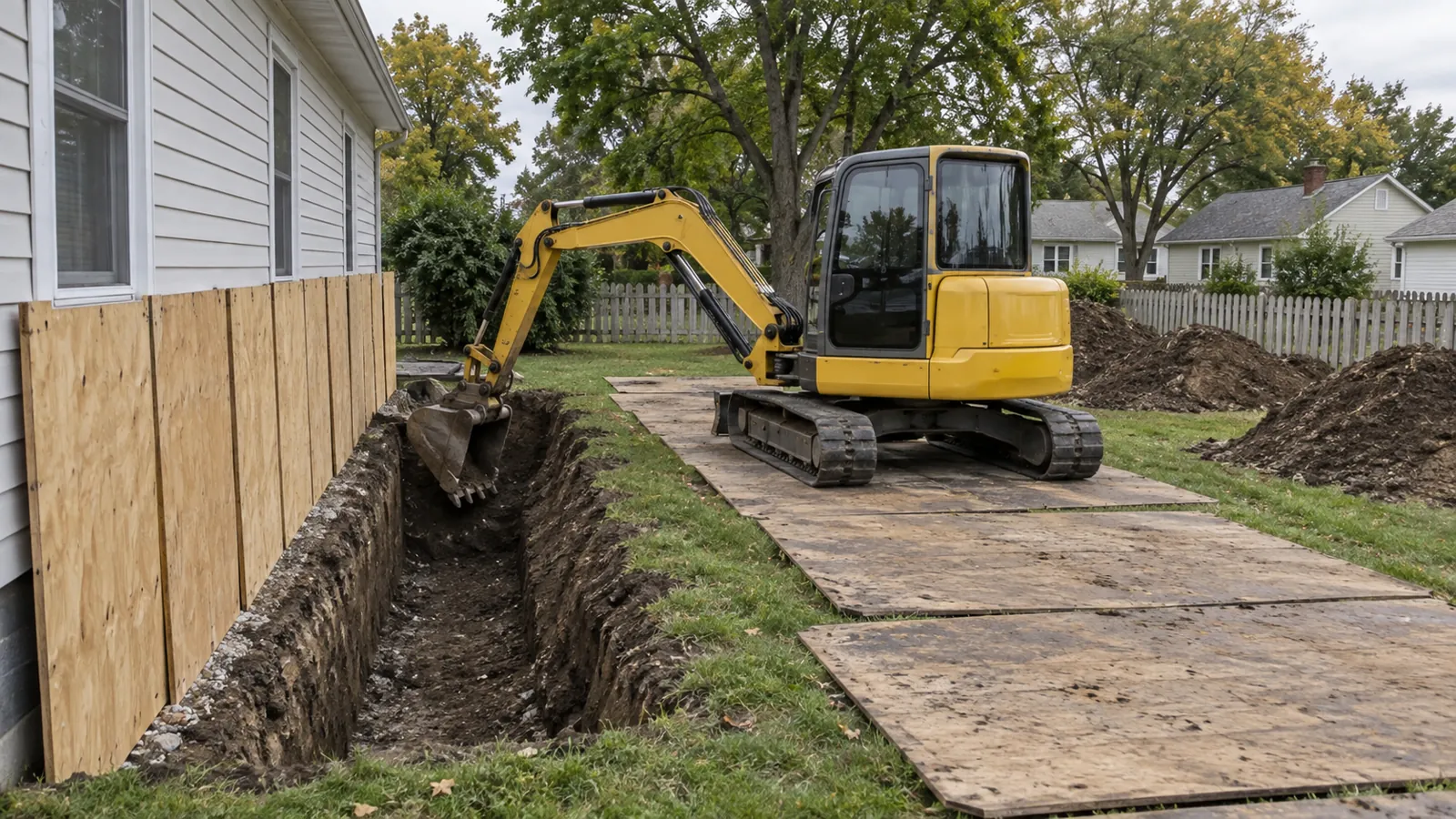
A homeowner's dig is rarely the only thing on the lot. Plymouth residential excavation services start by walking the route a machine will take and marking what it must not touch, such as a sewer cleanout, a sprinkler line, a patio, or a tree root zone. Spoil needs a place to sit or a truck waiting, so decide that before the first cut.
Describe the project, the depth, and what the yard should look like afterward. Rough grade, topsoil and seed, and a bare pad for the next trade are three different finishes, and each one changes the scope.
Commercial digs follow an engineer's drawings, with pad elevations, storm structures, and utility corridors that the earthwork has to match. A lot beside an open business also has to keep its entrance, parking, and sidewalks usable. When you line up commercial excavation contractors near Plymouth, ask who owns the haul schedule, the compaction testing, and the daily cleanup.
Send the civil sheets, the soils report if one exists, and the construction schedule. Mark the hours the business operates, the delivery routes, and any areas that cannot close, so the plan can work around them from day one.
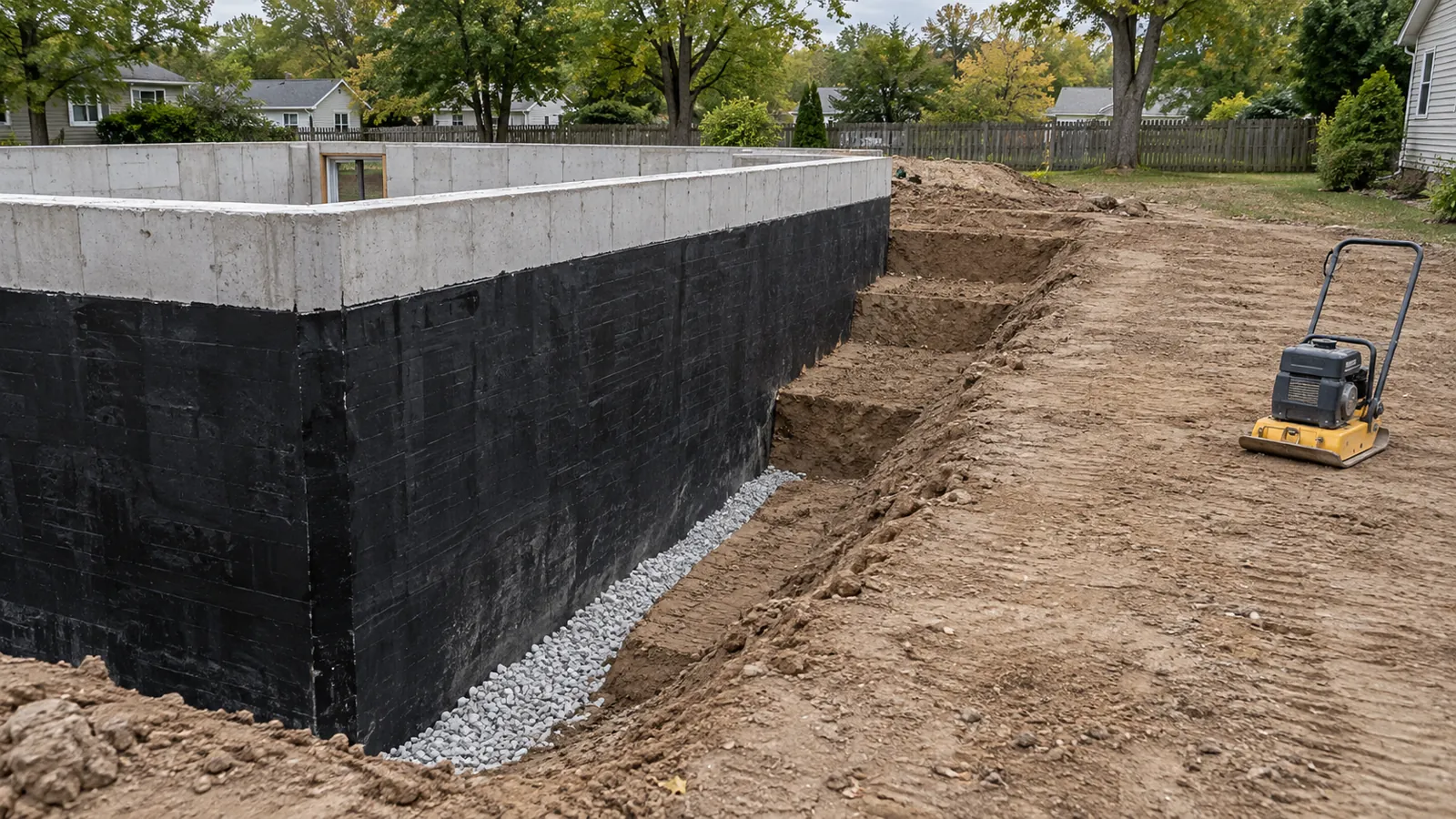
A basement is the biggest hole most owners will ever order. Basement and foundation excavation explains over-dig, spoil handling, and groundwater in more depth. Wall crews need room to stand outside the footprint, so a tight lot changes the plan before the machine arrives.
Ask Plymouth basement excavation services what bottom elevation they are digging to, how much room they leave beside the footprint, and what they do when water or soft ground appears. Find out how the open walls will be sloped or braced while the hole stands. Reliable Michigan basement excavation contractors also settle with the wall crew when fill may be pushed against the new walls.
Every footing ends up resting on whatever soil the trench bottom exposes. Crews offering foundation excavation services should trim the trench to the planned depth and width, clean the bottom by hand where the bucket leaves loose soil, and avoid over-digging, which would mean fill beneath the concrete.
Wet ground or loose fill at the planned depth can send a footing lower, and the engineer or building inspector decides what the final bottom must be. Say if you already know of soggy corners or fill brought in years ago. A useful message about foundation excavation Plymouth projects gives the footing size, the planned depth, and the person who approves the open trench before the pour.
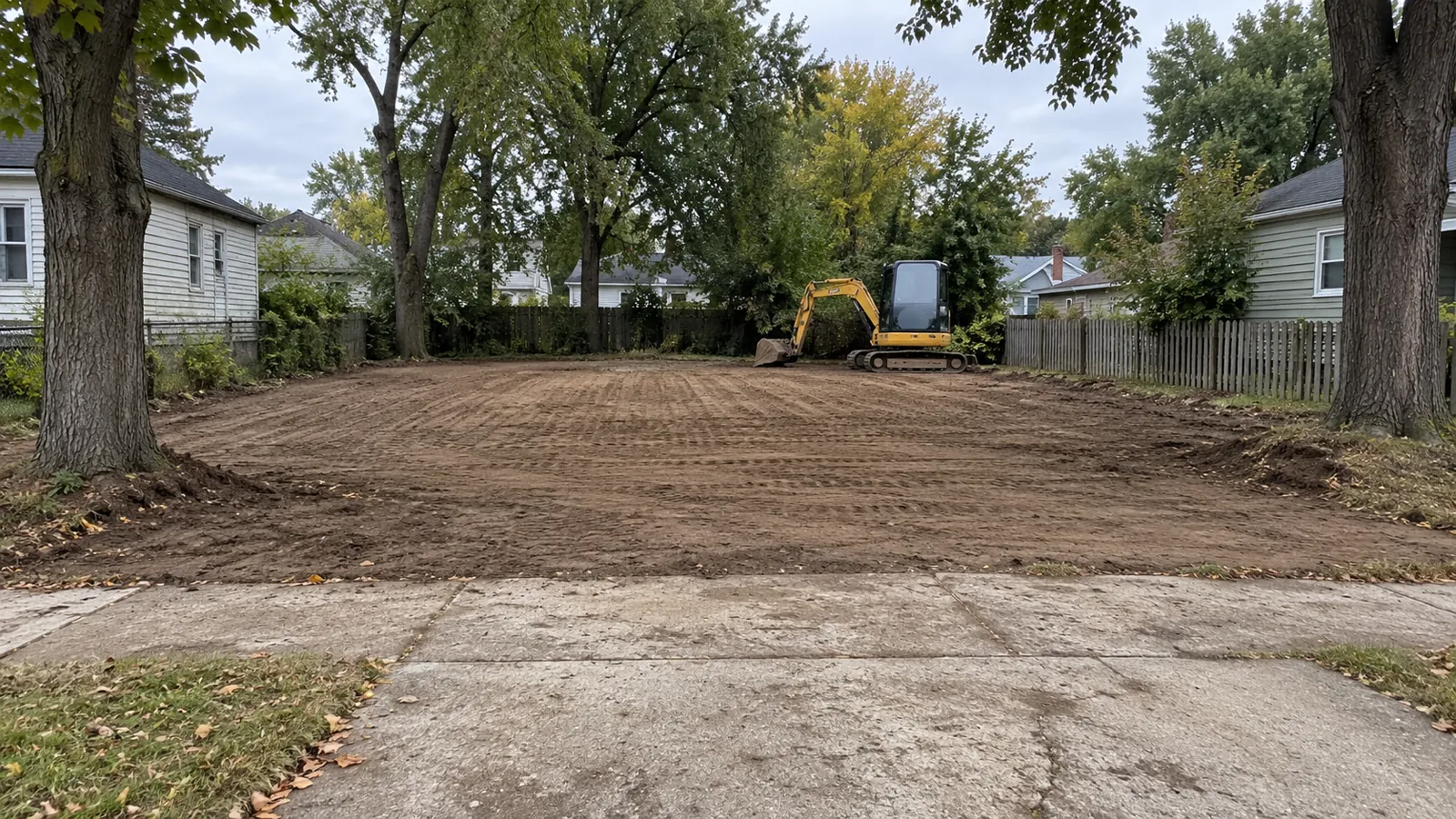
Raw ground needs a few steps before a foundation. Excavation and site preparation is the companion page on clearing, stripping, and rough grading, and it explains how each step feeds the next. Before you compare site preparation contractors Plymouth bids, ask each one which of those tasks sits in the price and which is left to someone else.
Set topsoil worth reusing aside before fill arrives. A rock entrance for trucks and a line of silt fence belong in the scope too, along with a target elevation written as a number.
Before a pad or driveway can be staked, the brush, stumps, old fencing, and debris must go. Walk the lot with the crew and tag each tree that stays, so no machine rolls over its roots. Every cut also makes spoil or calls for fill, so the clearing plan and the trucking plan are one plan.
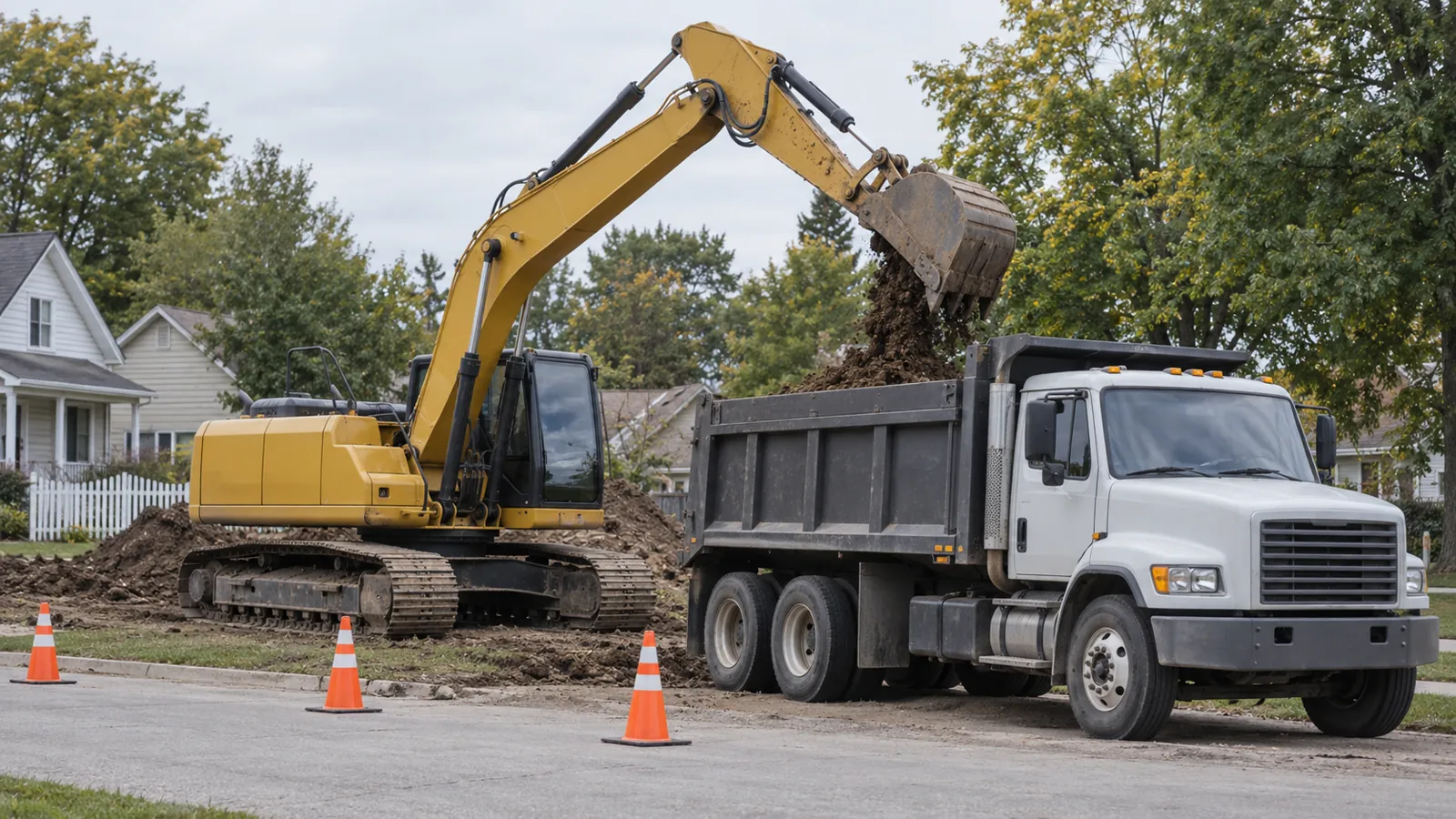
If you searched land clearing near me, a sketch of the cleared area drawn over a wide photo says more than a description. Cleared soil is easily carried off by rain, so ask what protects it until building starts. A quote for dirt hauling in Plymouth MI should state the number of loads leaving, the number arriving, and where a loaded truck can wait.
Water takes the path the surface gives it, and a few inches of slope set that path. Owners who hire grading contractors in Plymouth are often correcting a lawn that sheds rain toward the foundation or a corner that stays boggy long after a storm. Grading and leveling compares rough grade with finish grade and explains how elevations are checked.
Freeze and thaw can turn a marginal slope into a puddle by March. Plan the finished surface so runoff leaves the house behind it and ends somewhere the owner may lawfully send it. Agree beforehand who supplies and spreads the topsoil and seed.
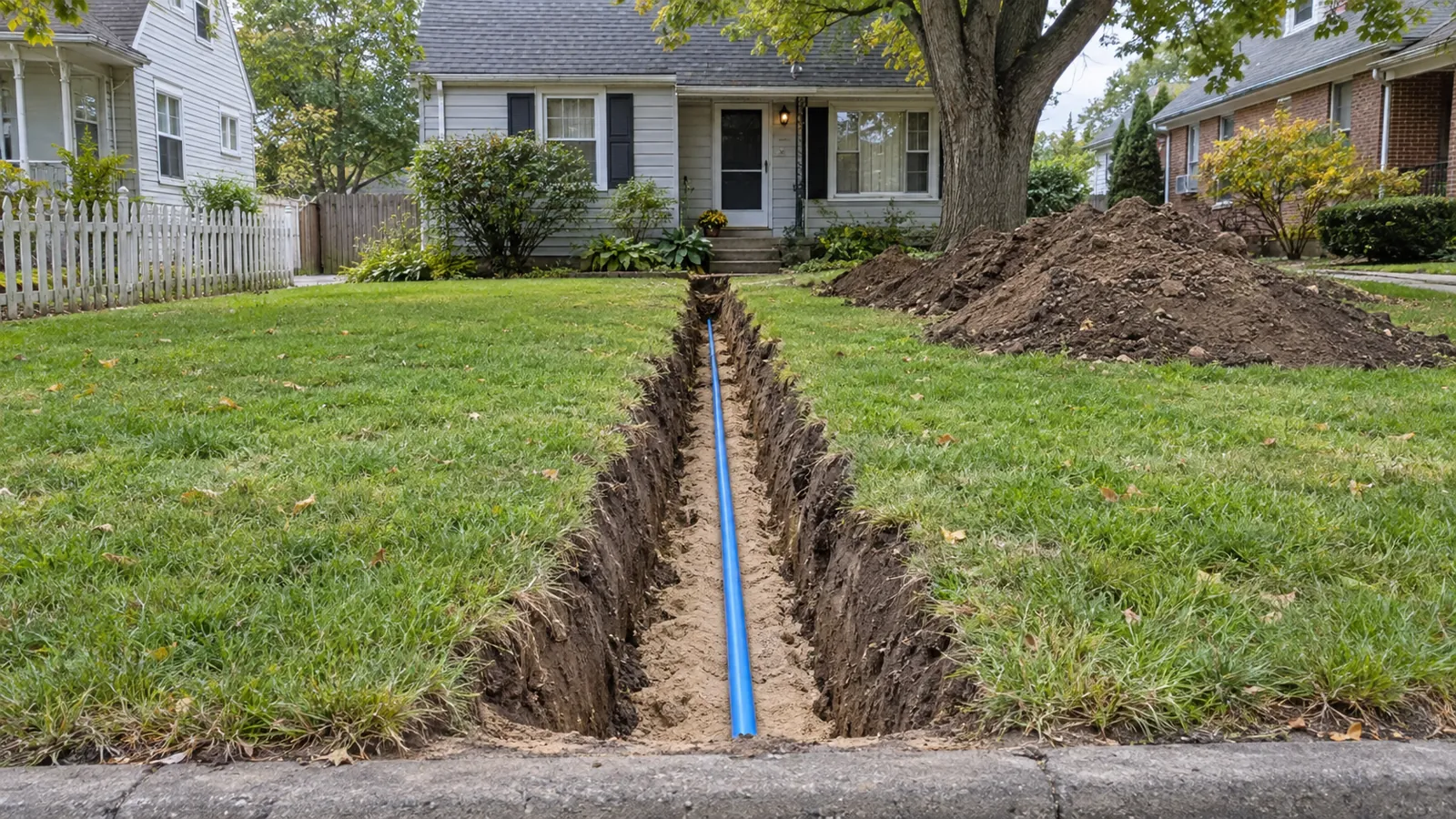
Water, sewer, storm, and electrical conduit runs each need their own depth and a route clear of the lines already in the ground. Trenching and utility excavation covers locating, bedding, and repairing the surface. Excavation Plymouth, Michigan requests for a service line go faster when they show the start point, the end point, and every walk, drive, or pipe crossed along the way.
Before anyone digs, this guide lays out the steps between a locate request and digging, starting with a MISS DIG 811 request. Hookups belong to a licensed plumber or electrician, while the crew supplies the trench, the bedding, and the cover over it. Deep walls must be cut back or shored before anyone steps in.
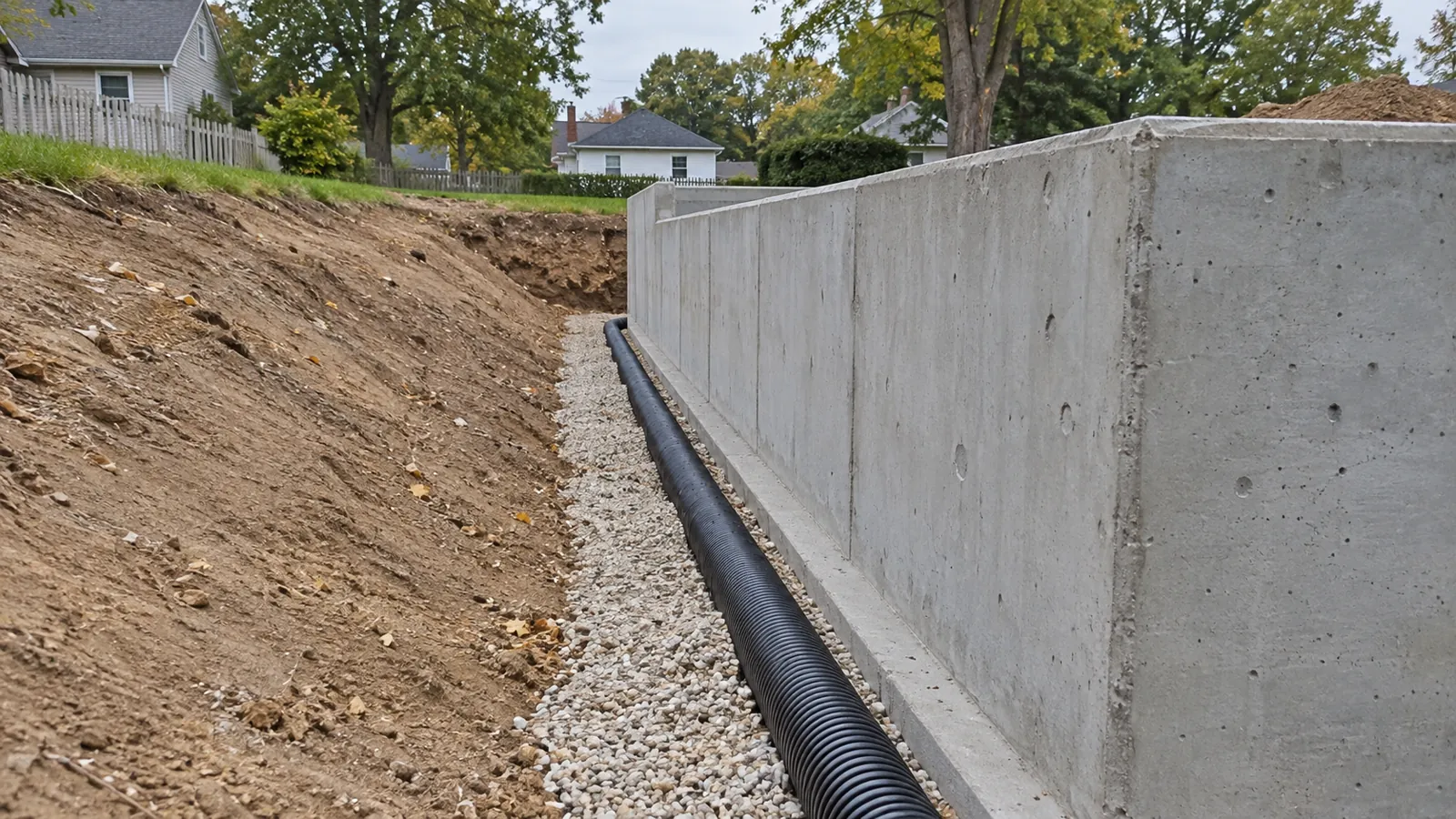
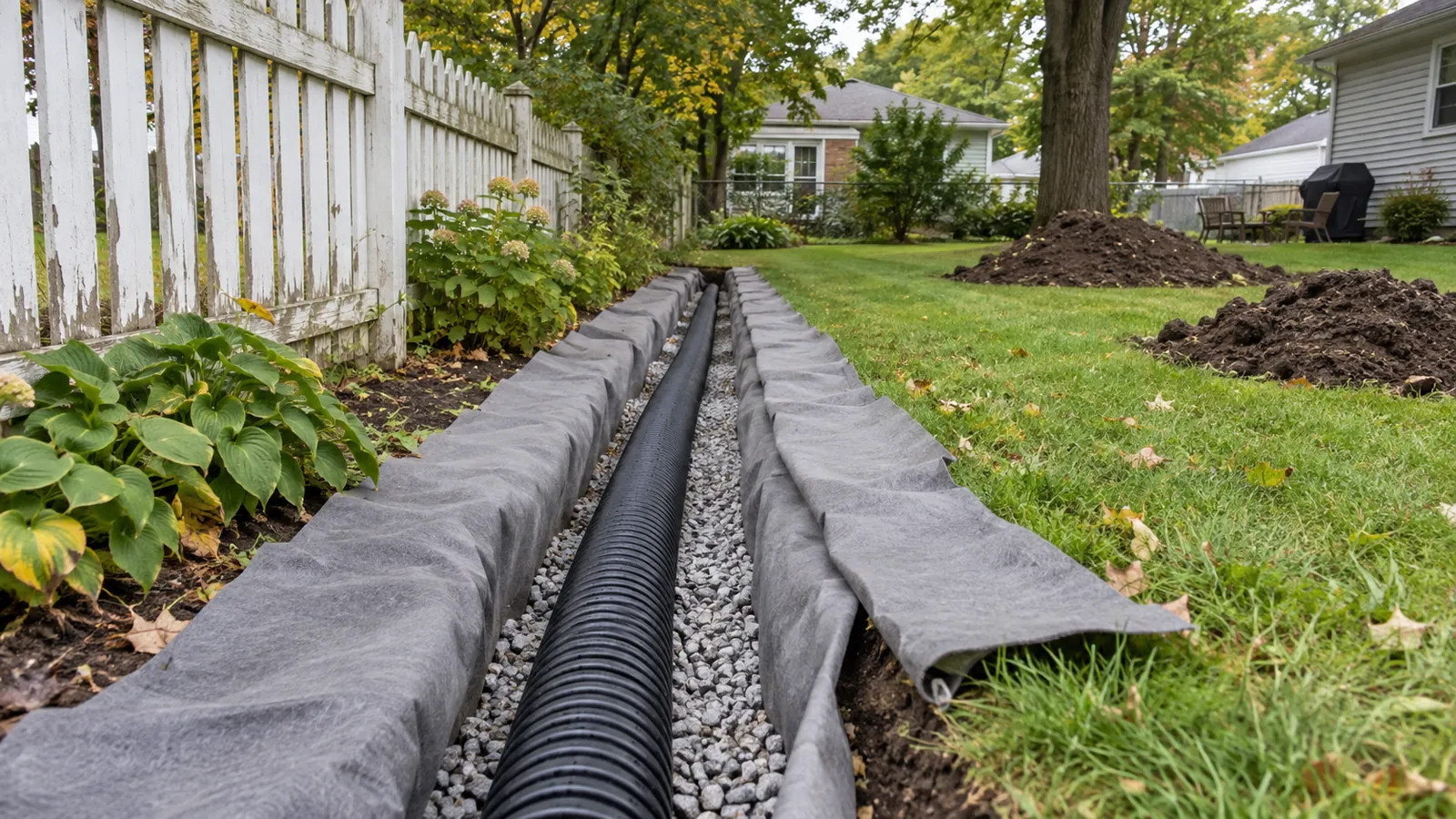
Water against a foundation or standing in the same low spot every spring seldom ends with regrading alone. Drainage and French drains matches the fix to the cause, whether that is perforated pipe in stone, a grassed swale, or extended downspouts. Whichever fix fits, the real test is whether the water has a legal place to end up.
After typing french drain installation near me, take photos during a storm and mark where runoff enters, collects, and could leave. Pipe, stone, and fabric need a steady fall toward the discharge point along the whole run. Before pricing, drainage contractors in Plymouth MI should tell you exactly where the water will end up.
A septic field is a soil question first and a tank question second. Owners whose lot has no sewer main often start with a search for septic installation near me, but the permit comes from the county health department, and only after a soil evaluation. Before you pick a tank location, read how septic permits are issued.
After the permit is issued, the crew excavates the tank pit, lays out the leaching area, and plans a truck path that stays off it. Confirm the requirements with the county health office first, and we'll confirm what the site needs once you share the parcel details. Attach three things to your first message about septic system installation in Plymouth MI: the parcel details, the house plans or size, and any soil records.
Backfill is the soil and stone that go back around a wall, over a pipe, or into the space an old structure left. Excavation service explains how fill is placed in lifts, compacted, and graded once the walls or pipe are in. When you search backfill contractors near me, bring one question to every bid: how thick is each lift, and what machine compacts it?
Different zones take different material: free-draining stone near the footing drain, clean fill against the wall, and topsoil only at the top. Rollers and loaded trucks should stay clear of a new wall until its braces are in place. For backfill and compaction in Plymouth MI, ask to see the material, its source, and the test used on every lift written into the bid.
The strength of a gravel drive is underground. Sod and soft spots are stripped, then stone is laid down and rolled in thin layers, and the finished crown sheds rain to the sides. Where the approach crosses a ditch beside the road, a culvert keeps that ditch draining, and anything built inside the road's right of way means confirming with the road authority first.
Three questions sort gravel driveway contractors in Plymouth quickly: how deep is the base, what stone goes on top, and what holds the edges in place? Send photos of the approach, the street edge, and any ditch, and say what will drive on it.
Need a house, garage, slab, or pool removed before the dig? Visit our Demolition Plymouth, Michigan page.
ZIP Code 48170 serves the City of Plymouth in Wayne County, where SEMCOG's July 2024 estimate counts 9,534 residents. City resources point to the Plymouth Ice Festival and Art in the Park for community events, plus recreation leagues and activities, and the parks page names Kellogg Park and Hines Park. WeatherSpark describes warm summers, freezing, snowy, and windy winters, and partly cloudy conditions year round, so plan digging, backfill, and seeding around frost and thaw.
The 2020-2024 ACS 5-year estimate puts local unemployment at 3.8%, under the 5.2% national comparison. Michigan's 6% sales tax sits below the 7.53% nationwide figure, which is population-weighted and includes local rates. Ask the governing office about the exact parcel, because a general checklist cannot say whether the city or the township applies.
Excavation Plymouth, Michigan is simplest when the opening message says what is being dug, where the machine enters, and how the ground should end up. When you shortlist excavation companies nearby, see West Branch Builders' earthwork planning approach first and decide what to send them afterward.
West Branch Builders operates from a Belleville business address, and Plymouth sits within the Southeast Michigan area it covers. Each visit begins with the parcel: its soil, its slope, its access, and the neighbors on every side.
Before a start date is chosen, an excavating contractor in Plymouth MI should put the limits of the dig, the soil plan, and the repair of the yard on paper. Permits, utility locates, and engineering calls remain with the offices and professionals who own them.
Proposals from excavation contractors in Plymouth line up cleanly when each one answers the same written questions: what is covered, what is left out, and what would change the price once the ground is open.
Excavation Plymouth, Michigan estimates swing most on three things: how much ground is opened, where the spoil has to go, and how hard the work area is to reach. Spoil that must leave and fill that must arrive often outweigh the digging itself.
Collect the plans, photos, and your target date before anyone starts quoting. Whoever you hire as the excavation service contractor in Plymouth MI can price only what the request describes, so spell out how deep, how wide, and what surface you want left behind.
Ask each bidder to separate the digging from trucking, imported fill, testing, drainage materials, and cleanup. Use these questions that make bids comparable so the proposals can be read side by side.
Groundwater, frozen soil, or an old foundation hiding under the lawn can change the job after digging starts, so decide in advance who approves extra work and how it is billed. Permit and inspection needs belong to the governing office, so confirm them for the parcel before relying on any number.
A well-run excavating crew protects what stays, keeps spoil out of the street, and leaves the lot ready for the next trade.
Skilled excavation contractors fit the machine to the access, sparing the lawn and the drive the damage a bigger rig would cause.
A Plymouth excavation company that documents the plan before digging leaves you holding one record of the work: what came out, what went back, and how the surface was left.
Cost follows three variables: how much ground is opened, how deep the cut goes, and how hard the work area is to reach. A tight drive or crowded lot adds truck trips and machine time, while a wide-open yard keeps both low. Stone, pipe, fill, and topsoil bring material charges of their own. Standing water, soft spots, or old debris surface once the hole is open and can add work. Gather your plans and a few photos of the way in, say what the finished surface should be, then compare bids line by line instead of by their totals.
Start by deciding which jurisdiction applies, since Plymouth Township is separate from the City of Plymouth. A building department reviews new houses and additions. Bigger earth moves may be covered by Part 91 soil erosion and sedimentation control, enforced by the county or a local agency. Septic systems go through the county health department, and only after a soil evaluation. Work beside a lake, stream, or wetland may need review at the state level, and work that touches a road right of way means checking with the road authority. Confirm every item with the office that issues it, since a contractor's scope never replaces one.
Timing depends on the dig, and on whatever has to happen before and after it. A short trench is often a brief visit, but a basement spans the dig, the wait for the foundation, backfill, and final grade. Frozen ground, a wet spring, or standing water in the hole can pause work or keep fill from compacting. Underground marking and permit review must finish before a machine arrives, and tight access slows loading and hauling. Ask each bidder for the order of work and what each step waits on, since a single promised date hides those dependencies.
Sediment, runoff, and spoil are the main environmental concerns on a dig. Controls such as silt fence, a gravel drive entrance, and tarped stockpiles hold sediment on the site and out of the street and storm drain. A parcel beside a stream, pond, or wetland may need state review of its own. This guide to erosion control permit planning explains how to find the agency that reviews a given parcel. Pumped water, surplus soil, and old debris each need a lawful destination, and none of them should end up on a neighbor's property. Before work begins, confirm the current rules for the exact address with each agency involved.
The most useful first message about a Plymouth project is brief: the address, what is being built or repaired, where equipment can enter, and the surface you expect at the end.
Photos of the entry route, a survey or set of plans, any soggy areas you have noticed, and the date the site must be ready let us shape the first estimate. Final say on approvals and design stays with the agencies and engineers involved.
Call (734) 476-1098 or complete the quote form to discuss Excavation Plymouth, Michigan.