
Quality & Dependable Excavation Company.
Need an excavating contractor in Ann Arbor, MI for a basement, an addition, a utility trench, or a yard that holds water?
Your free estimate starts with a site visit focused on how equipment reaches your lot.
Free Fast Quote
Please fill out this form to request a free quote for your excavation project and we will respond to you right away!
Excavation Ann Arbor, Michigan
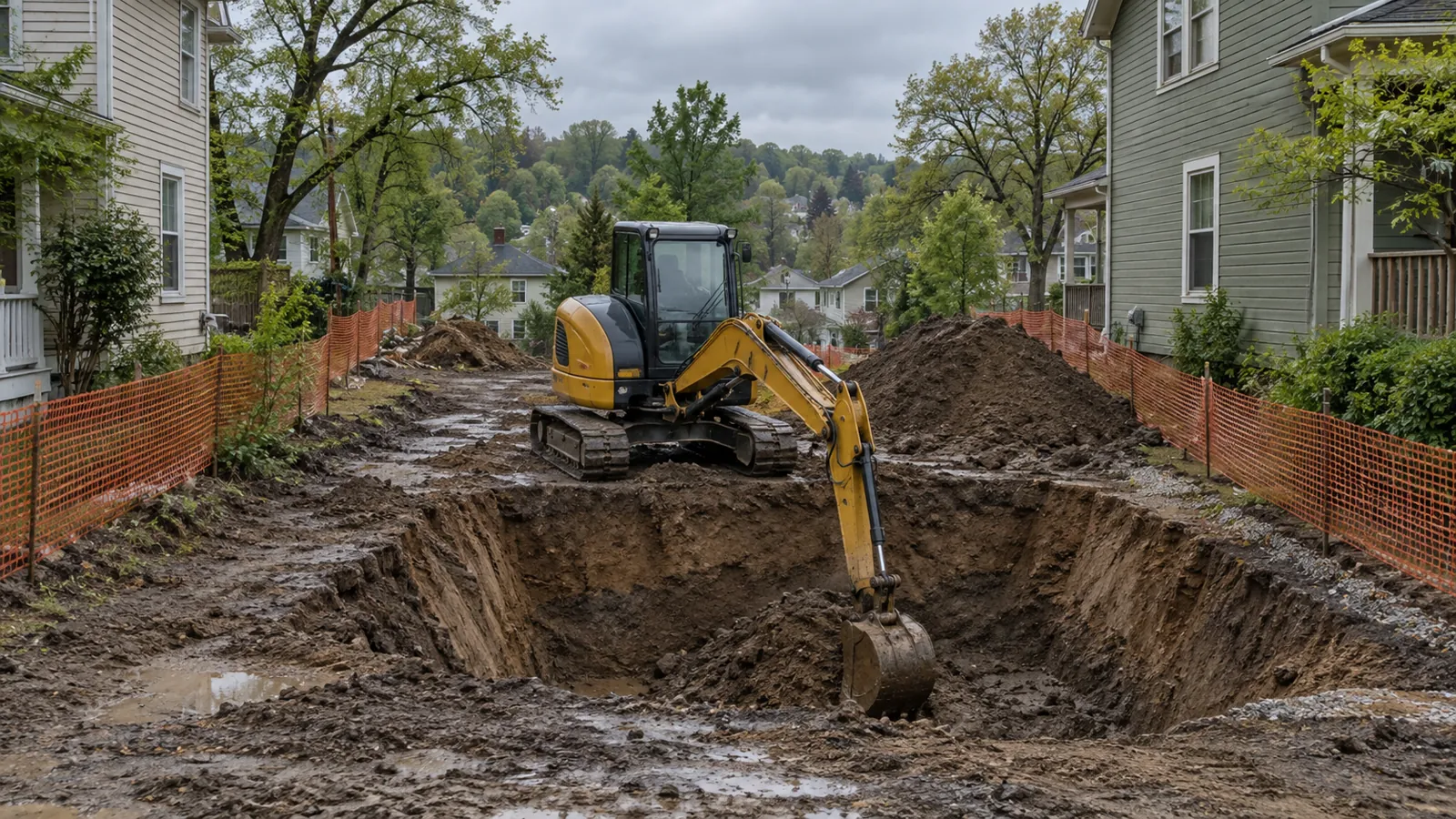
Excavation Ann Arbor, Michigan can be a tight-quarters job on older city lots, where houses sit close together, mature trees shade the yard, and there is little room to stockpile soil. The first question is often not how big the machine is but how it reaches the work and where the dirt goes.
Excavation Ann Arbor, Michigan covers basement, addition, trench, drainage, and grading work planned around those limits, from narrow infill lots to larger parcels at the edge of the city.
Most requests start with one of a few projects: a new home on an infill lot, an addition behind an older house, a new water or sewer line, or a wet backyard. Each has its own depth, its own access problem, and its own finish line, so say which one you are planning.
Access shapes almost every Ann Arbor dig. Shared driveways, narrow side yards, fences, overhead lines, and street parking limits decide which machine fits and how trucks load. Mature trees deserve a plan too, since roots often sit right where a trench or footing wants to go.
Slopes and water come next. A lot that falls toward a street, a neighbor, or the Huron River needs a plan for runoff while the ground is open, and work near the river or a wetland can need state review before it starts.
Confirm current City of Ann Arbor requirements for the exact address before scheduling, since permits and inspections depend on the parcel and the scope. Then send the address, photos of the access, any plans or survey, and the date the site needs to be ready.
An excavation crew in Ann Arbor has to plan the route in, the stockpile, and the truck loading before it plans the dig itself. The cards below split the common requests into the questions each one raises. A search for an excavation company near me rarely says how tight the lot is, so describe it. Excavation Ann Arbor, Michigan gets simpler once you tell us the project, how a machine reaches it, and the finish you expect.
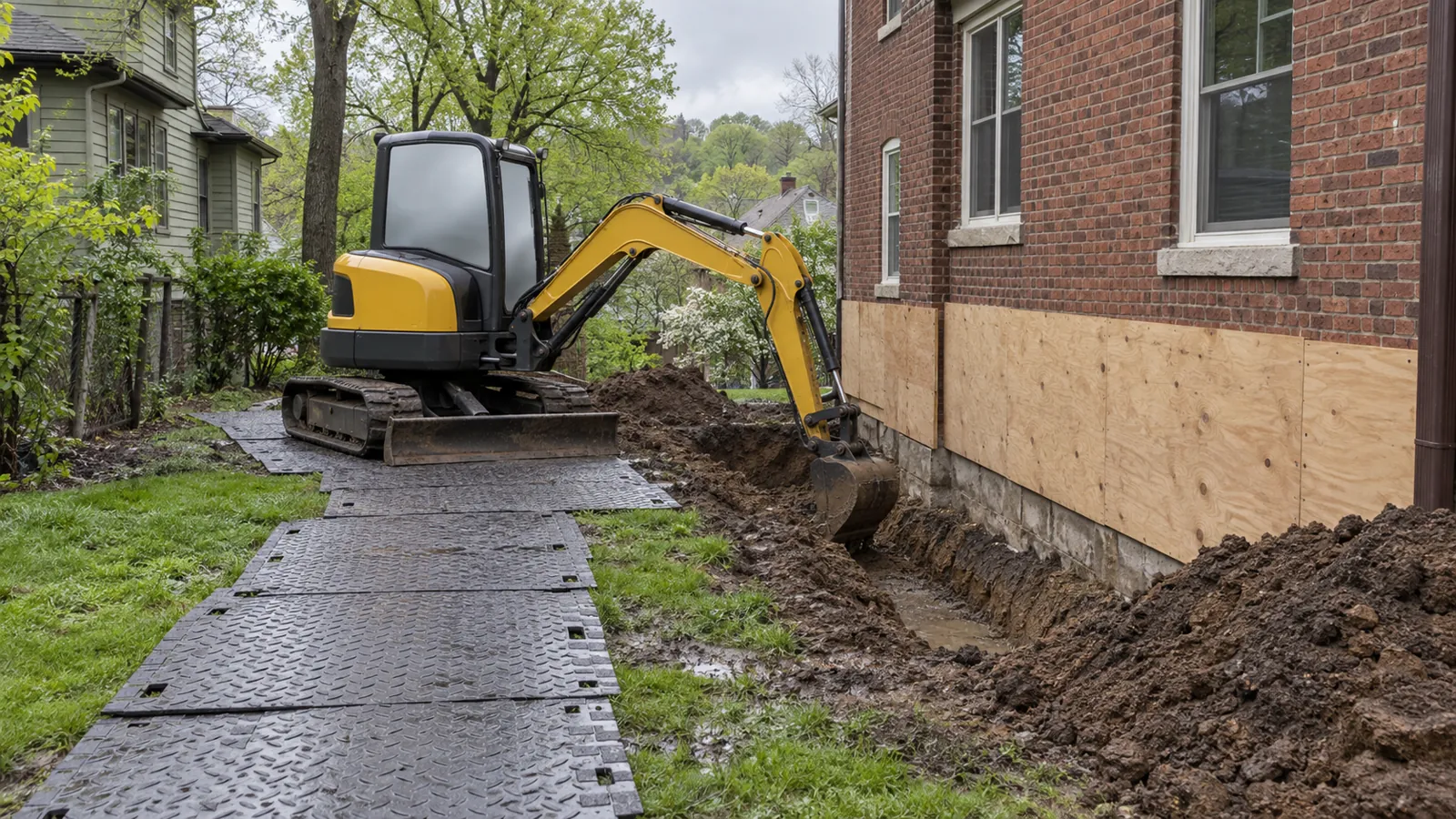
On many older Ann Arbor lots, a residential dig sits within a few feet of a neighbor's fence, a driveway, or a mature tree. Ann Arbor residential excavation services start with how the machine gets in, where soil can sit, and what must be protected along the way. A rear or side addition adds an old foundation to protect, along with any drain tile that runs beside it.
Tell us the project, the depth, and how the yard should look when the work is done. If soil cannot be stored on the lot, hauling it off and bringing material back becomes part of the scope and the price.
Commercial and institutional sites in a busy city come with tight staging, steady traffic, and neighbors who stay open during the work. Pads, parking areas, and utility corridors follow civil drawings, and the excavation has to hit those elevations while trucks move in and out safely. Before choosing among commercial excavation contractors near Ann Arbor, find out how each one fits hauling, testing, and staging into the general contractor's schedule.
Share the civil sheets, the geotechnical report, and the site logistics plan. Note loading zones, sidewalk closures, and work hours so the plan respects them from the start.
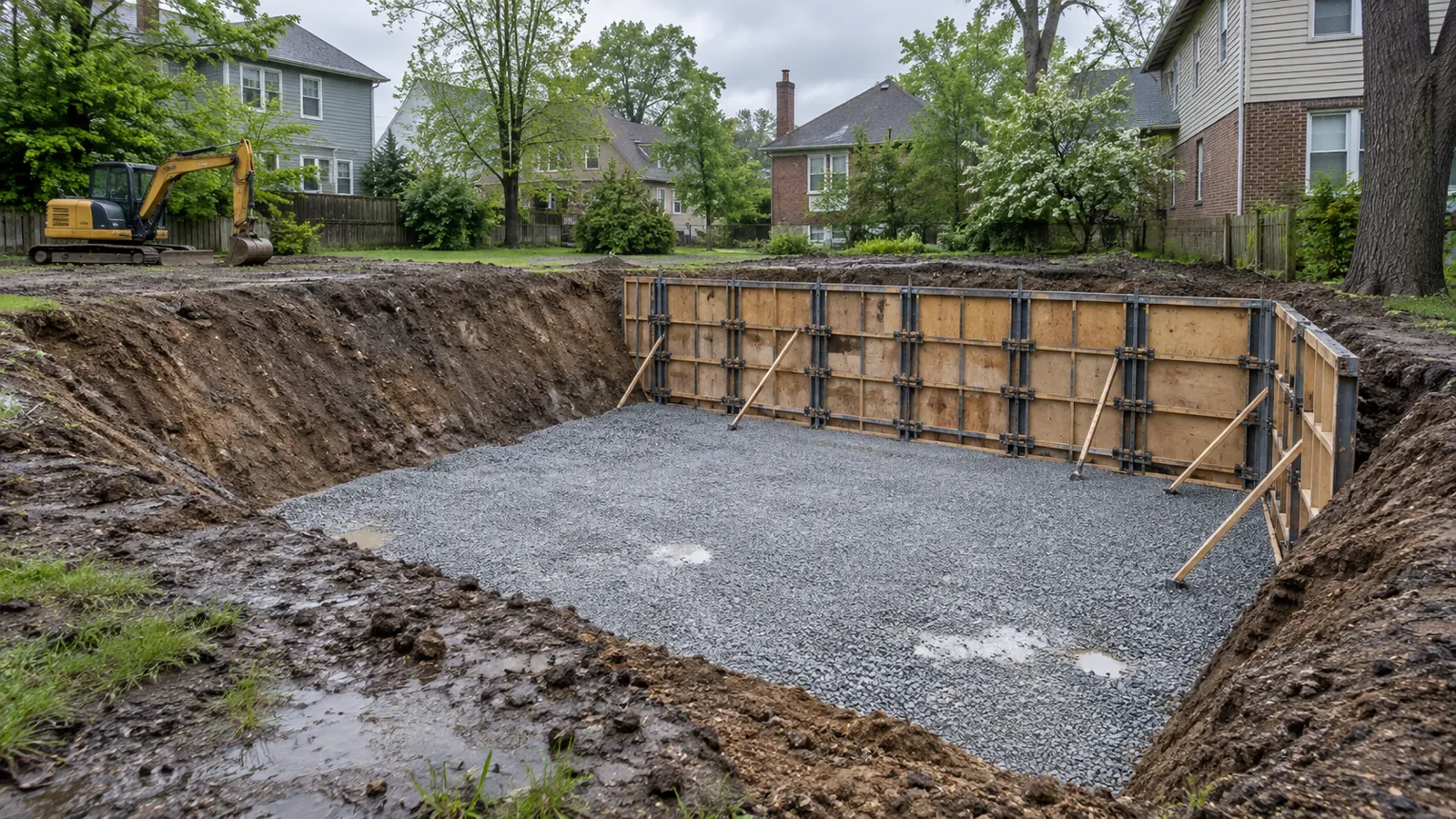
A basement on a narrow lot needs over-dig room for the foundation crew and a place for a large volume of soil to go, often straight onto trucks. Basement and foundation excavation covers depth, over-dig, spoil, and groundwater in more detail. When the lot cannot hold a stockpile, truck timing becomes part of the dig plan.
Ann Arbor basement excavation services should name the bottom elevation, how the excavation edges are sloped or supported near neighboring foundations, and what happens if water shows up at depth. Someone should be watching the adjoining structures for as long as the excavation stays open. Good Michigan basement excavation contractors set the backfill timing together with the foundation crew.
Additions, garages, and porches on older homes usually need footings dug to frost depth along a precise line. Careful foundation excavation services keep trench bottoms clean and undisturbed and stop at the elevation on the plans. Layout stakes and string lines go in before the machine does.
Older lots can hide old foundations, buried debris, or fill from earlier work that a footing cannot bear on. If that turns up, the inspector or designer decides what the footing needs. A good request for foundation excavation Ann Arbor projects lists the footprint, the depth, and the person who approves the bottom before the pour.
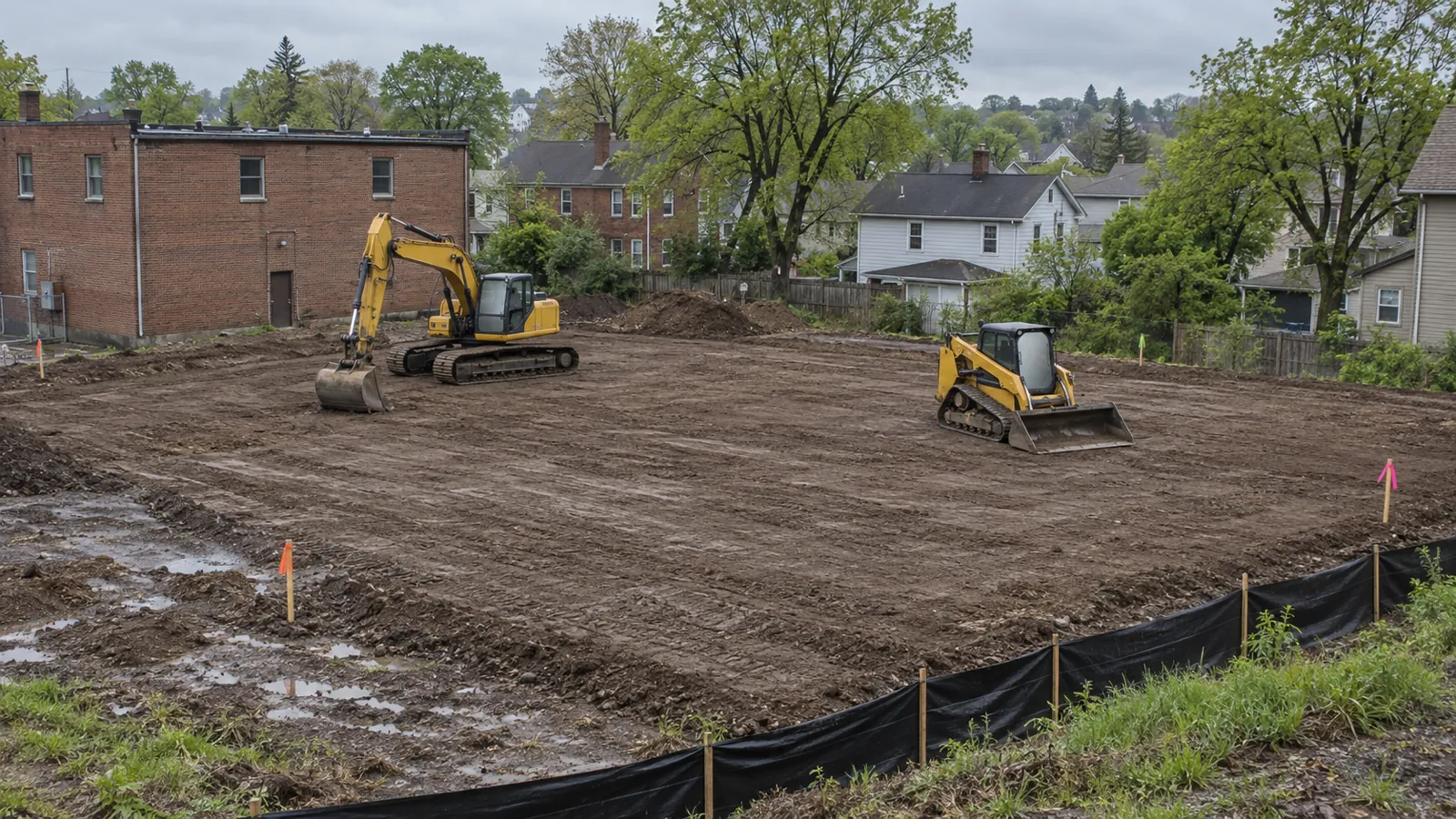
Before construction, a lot may need stripping, rough grading, erosion controls, and a stable stone entrance so trucks do not track mud onto the street. Excavation and site preparation explains where that work fits between clearing and construction. Ask any of the site preparation contractors Ann Arbor offers to spell out silt fence, inlet protection, and where topsoil is stockpiled.
On a sloped lot, the order of stripping and grading decides how much soil moves in a storm. Whether the city or the county reviews soil erosion control can depend on the parcel, so confirm it early. Put the target elevations in writing so nobody has to argue about the result later.
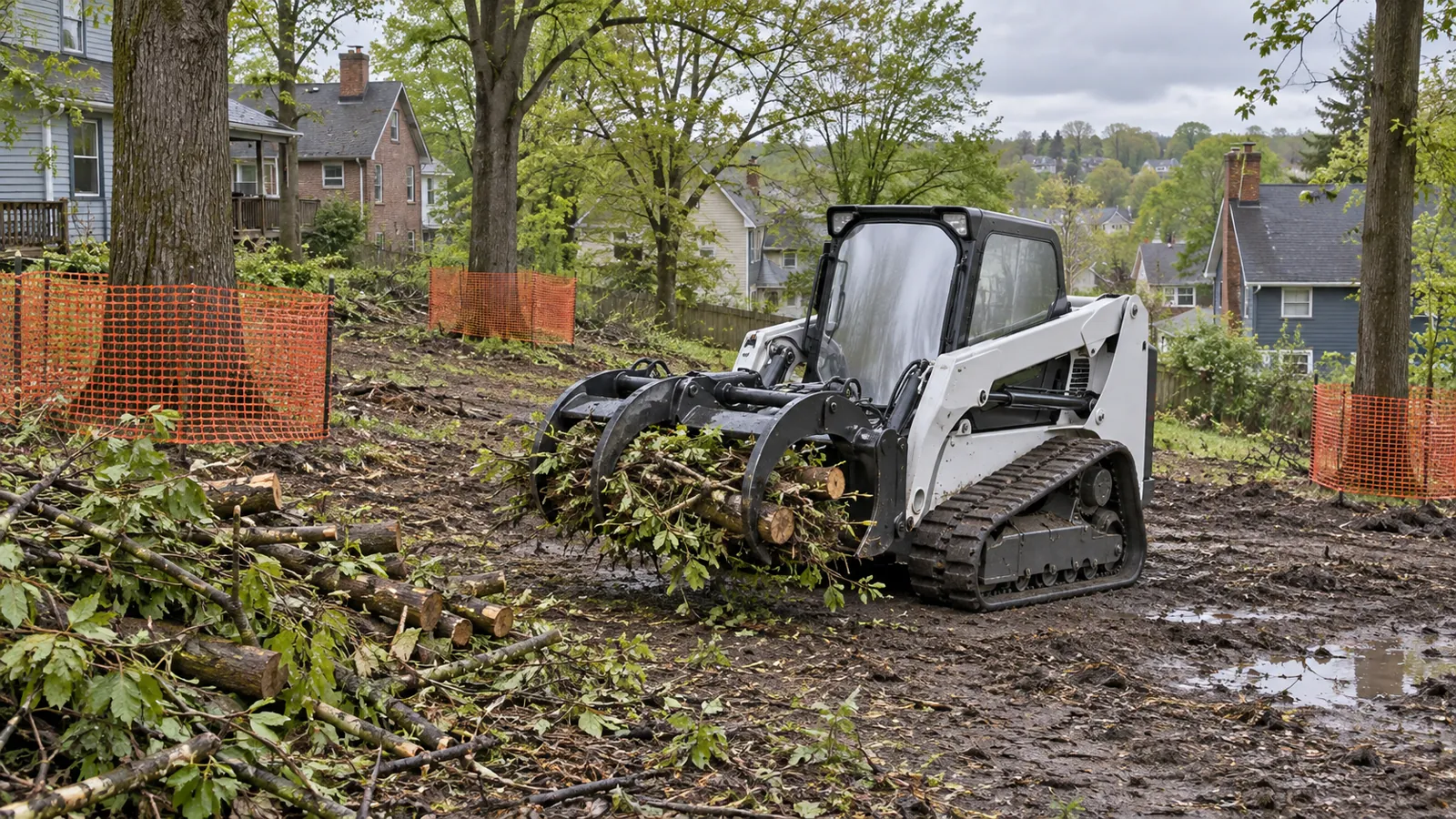
Infill and edge-of-town lots often come with overgrown brush, volunteer trees, old sheds, and stumps that have to go before layout. Mature trees are often worth keeping, so decide early which ones stay and how their roots will be protected. On tight city lots there is rarely room to stockpile, so cleared material and excavated soil often go straight onto trucks.
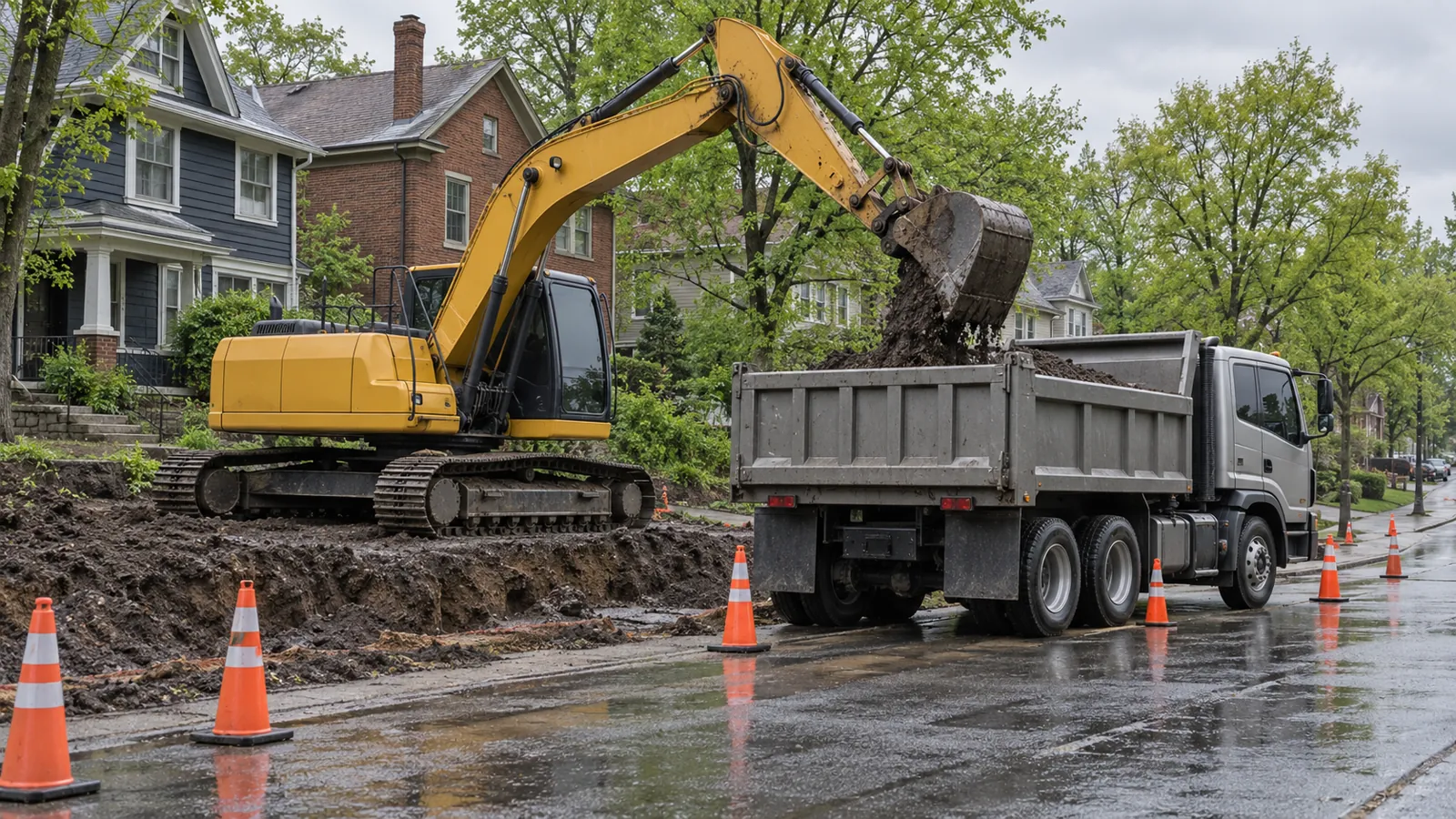
A search for land clearing near me should be followed by photos of the whole lot and a sketch of what must go. Each truckload needs a route, a time, and a place to stage without blocking the street. A plan for dirt hauling in Ann Arbor MI should count the loads, name where they go, and say where trucks will wait.
Grading decides where water goes, and on a sloped lot that matters even more. Homeowners calling grading contractors in Ann Arbor often have a backyard that sends water toward the house or a neighbor. Grading and leveling covers the difference between rough and finish grade and the way elevations get verified.
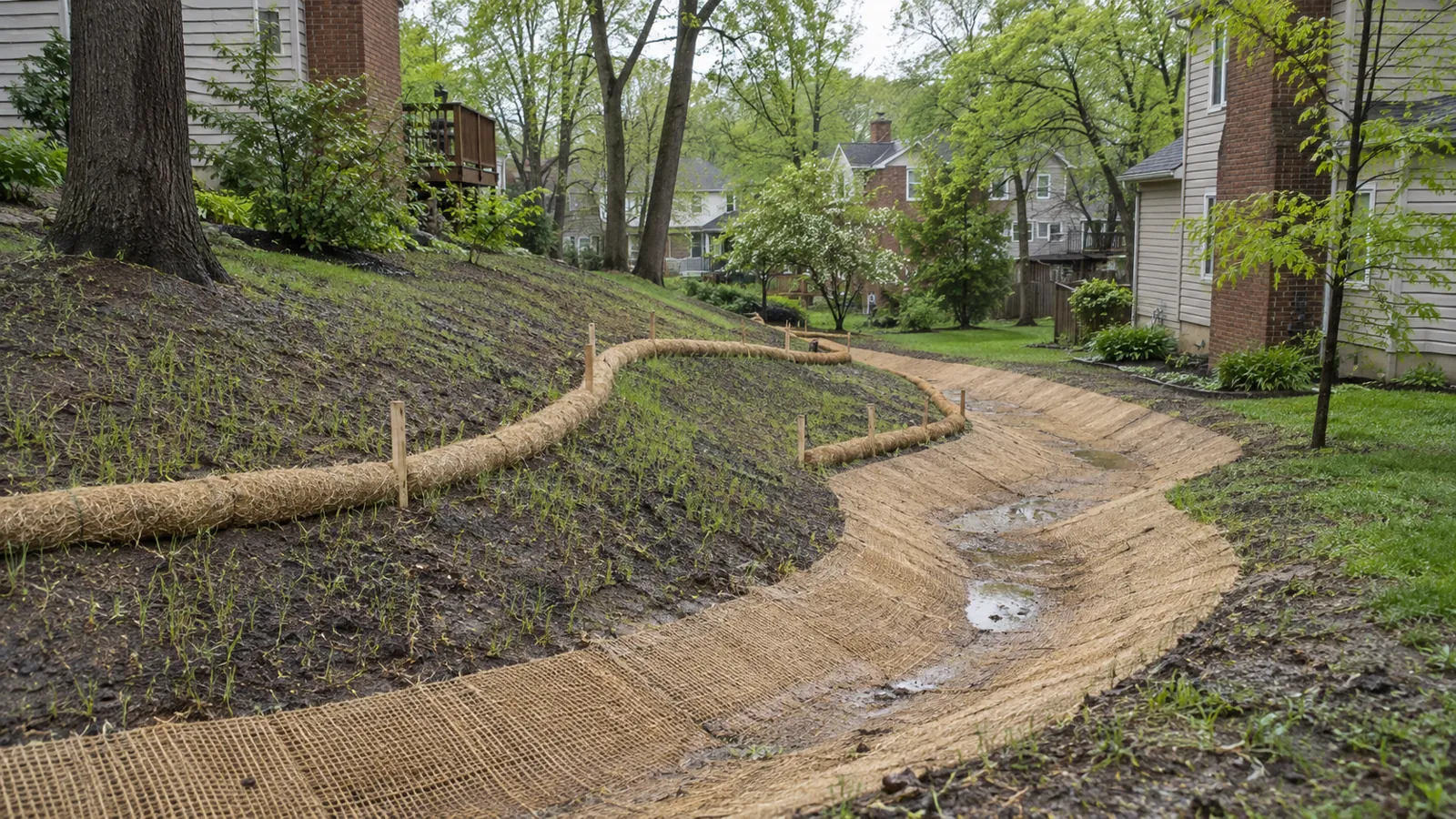
With repeated freeze and thaw, a grade that looks fine in summer can fail in spring. The finished surface should carry water away from the foundation to a legal outlet without dumping it on the next lot. Ask whether topsoil, seed, and erosion blanket are included.
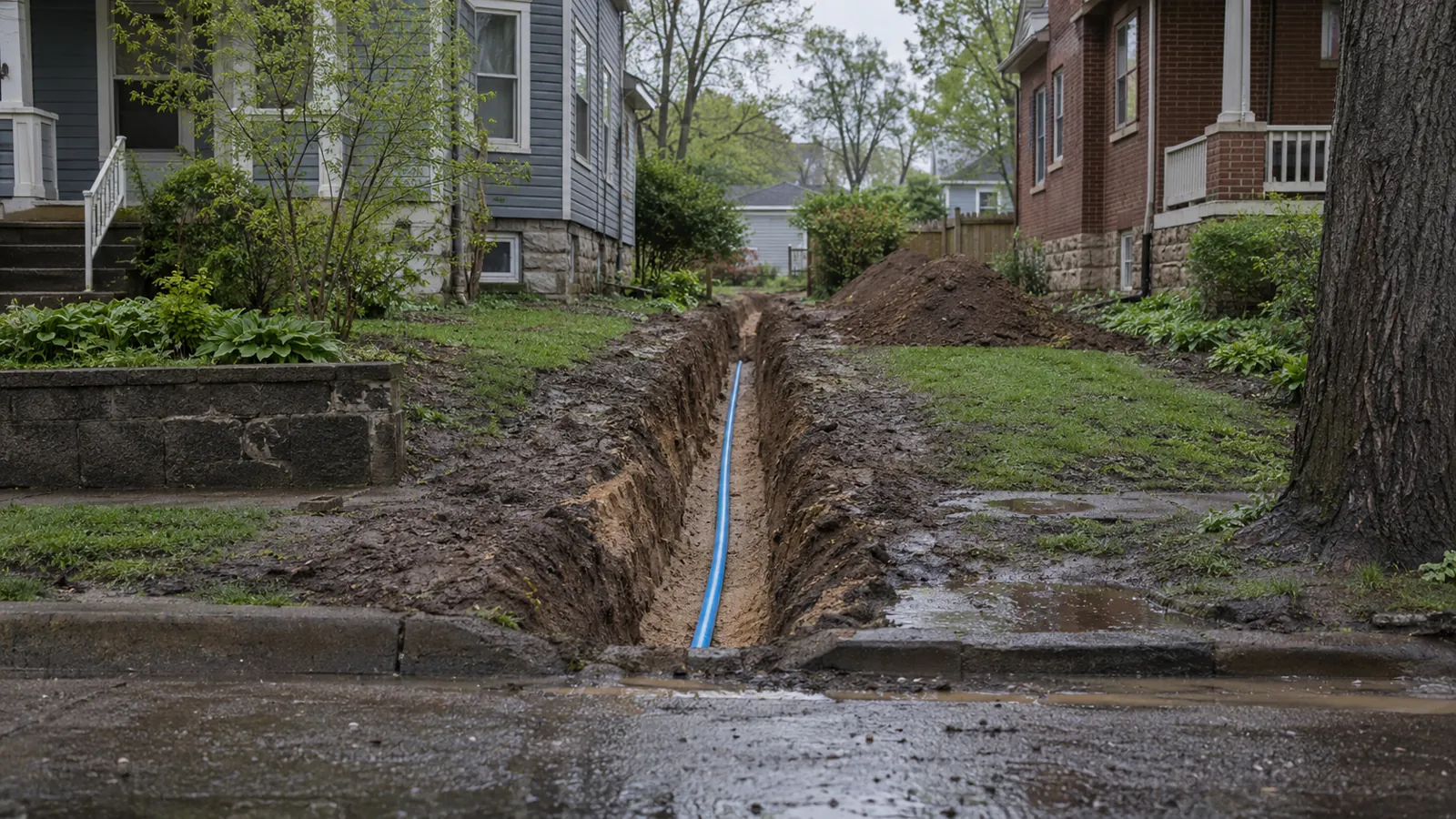
Replacing an old water service or sewer lateral means a trench from the house toward the street, usually through a narrow side yard. Trenching and utility excavation walks through route planning, pipe bedding, careful backfill, and putting the yard back. Excavation Ann Arbor, Michigan requests for a line replacement should show the full route, including walks and drives it crosses.
Before any digging, this explainer on public versus private utility locating shows what a MISS DIG 811 ticket covers and what it leaves out. A licensed plumber makes the connections, and work in the street or at the main follows the utility's and the city's rules. As the trench gets deeper, its sides must be cut back or shored, and nobody works inside an unprotected trench.
Hillside yards and older homes often share the same complaint: water running toward the foundation or soaking the same corner of the yard. Drainage and French drains sorts out when buried pipe, a shallow swale, or simply longer downspouts will solve it. Every system needs a lawful outlet, and on a crowded street that can take the most thought.
Anyone typing french drain installation near me into a search bar should first take photos during a hard rain. The pipe, stone, and fabric have to fall to the outlet along the whole run, which takes careful grade on a sloped lot. Good drainage contractors in Ann Arbor MI check that outlet before they price the trench.
Most city lots use sewer, but edge-of-town and township parcels may need a septic system. Anyone searching for septic installation near me should know that Washtenaw County reviews a soil evaluation and a system design before it issues a permit. This overview of soil testing before a septic system explains what that review looks at.
The dig covers the tank, the distribution trenches or bed, and keeping trucks off the finished field. The county health office sets the inspection steps, so check them early, and we will look at what your particular site requires before setting a date. To start septic system installation in Ann Arbor MI, send the parcel, the planned bedrooms or house size, and any soil reports.
Backfill is where many settling problems start, especially in narrow spaces where a large roller cannot reach. Excavation service describes how fill is placed, compacted, and graded once the digging and foundation work are done. Most homeowners who search for backfill contractors near me need soil placed in thin layers with equipment sized to the space.
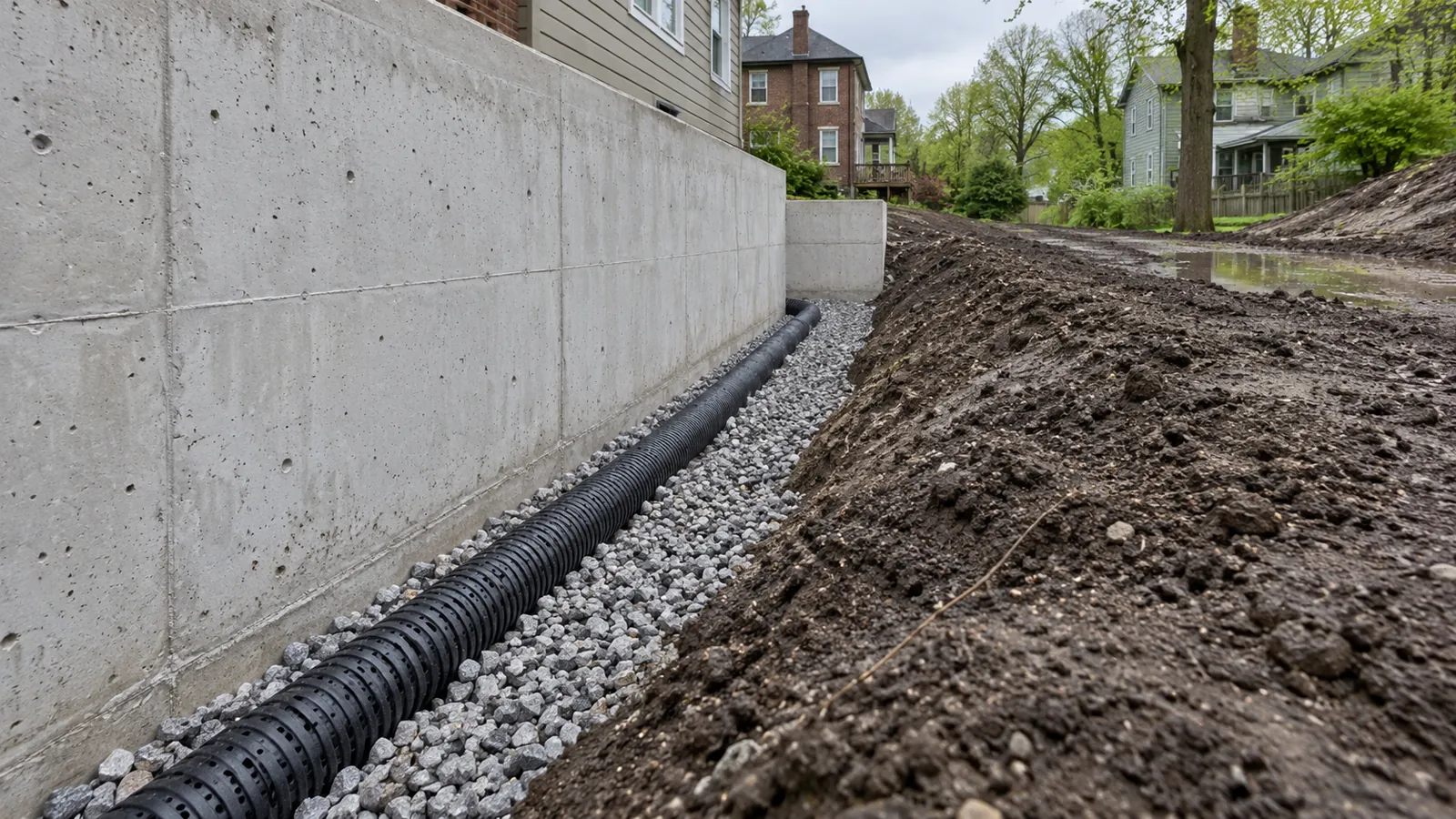
Washed stone surrounds the drain tile, native soil without debris goes against the wall, and topsoil is saved for the last layer. Keep heavy machines back from fresh foundation walls so they are not pushed out of line. Any written plan for backfill and compaction in Ann Arbor MI ought to name the materials and their source.
Driveway work in town usually means rebuilding the base under an old drive or widening it along a tight side yard. The old surface and soft soil come out, a compacted stone base goes in, and the finished grade has to shed water away from the garage and the house. On larger parcels at the edge of the city, a drive may also cross a road ditch that needs a culvert.
When you talk to gravel driveway contractors in Ann Arbor, ask how deep the base will be and how the edges will hold up. A culvert under a drive approach usually needs the road authority's permit, so confirm that before anything is ordered. Photos of the drive, the street edge, and any ditch make the first conversation useful.
Need a house, garage, slab, or pool removed before the dig? Visit our Demolition Ann Arbor, Michigan page.
Ann Arbor's 48104 ZIP Code covers part of the city in Washtenaw County, where Gallup Park and the Ann Arbor Farmers Market draw residents and visitors. Nichols Arboretum and the Huron River anchor the green side of town, and the parks system supports biking, walking and running through four distinct seasons.
The Census Bureau's July 2025 estimate puts Ann Arbor's population at 122,233. Local unemployment in the 2024 ACS was 3.6%, below the 5.2% national rate. Michigan's 6% sales tax applies here, while the population-weighted national average for combined state and local rates is 7.53%. Check current City of Ann Arbor requirements for the specific address before relying on a general list.
Excavation Ann Arbor, Michigan goes smoother when the plan starts from the access, the neighbors, and the finished condition. Anyone weighing excavation companies nearby can review how West Branch Builders handles excavation scope before sending the address and photos.
West Branch Builders is based in Belleville and serves Ann Arbor as part of its Southeast Michigan service area. Each scope still starts from the parcel: its slope, its soil, its trees, and how a truck reaches it.
A careful excavating contractor in Ann Arbor MI puts the dig limits, depth, soil handling, and yard repair on paper before any date is set. The city, the utilities, and any engineer on the project keep the final say on their own approvals.
Good excavation contractors in Ann Arbor will also explain how they protect neighboring property during the dig. Put that in writing next to the inclusions and exclusions so proposals compare fairly.
Excavation Ann Arbor, Michigan costs track the soil volume, the depth, the access, and how far material travels. On tight lots, hauling soil off and bringing fill back can cost as much as the digging.
Gather the plans, photos, and target date first. Any excavation service contractor in Ann Arbor MI needs the depth, the dig limits, and the expected final surface spelled out before a price means anything.
Ask for the dig itself to be priced apart from trucking, fill, testing, drainage stone and pipe, and lawn repair. Our notes on choosing an excavation contractor show how to line two proposals up item by item.
Groundwater, buried debris, and weather can change the work midstream, so agree up front on how extra work gets approved and billed. Confirm permits and inspections for the exact address with the governing office.
A practiced excavating crew can work in a tight yard without damaging the house next door, the shared drive, or the street trees.
Experienced excavation contractors match the machine to the access, so a narrow side yard gets a compact excavator instead of a torn-up lawn.
An Ann Arbor excavation company with a written scope hands you a single list of what is dug, what is filled, and how the lot is left.
Costs track the volume of soil moved, the depth of the dig, how hard the lot is to reach, and where material ends up. In Ann Arbor, limited access and little room to stockpile can mean more truck trips and more handling, which adds time. A basement or a long utility trench costs more than a short drainage run, and imported stone, fill, pipe, and topsoil add material costs. Groundwater, old foundations, or buried debris can add steps after the dig begins. Send plans, photos of the route in, and the finish you expect, then line proposals up scope against scope rather than by the lowest number.
That turns on the address, how much ground is disturbed, and the type of structure going in. New homes and additions go through the building permit process, and larger earth changes may also need soil erosion and sedimentation control approval. Parcels on a septic system also need a county permit based on a soil evaluation. Depending on the parcel, the City of Ann Arbor or Washtenaw County may handle that review. Work near the Huron River or a wetland can need state review as well, and digging in the street right of way has its own permit. Confirm current requirements with each office for the exact parcel before work is scheduled.
Duration depends on the size of the job, the soil, the weather, and the other trades in the sequence. A drainage run or a short trench may take little time on site, while a basement involves the dig, the foundation work, and then backfill and grading. Tight access can slow loading and hauling. Wet weather, frost, and the spring thaw can stop digging or keep fill from compacting properly. Locates and permits come before the first day. A step-by-step sequence, with the dependencies marked, is more useful than one promised finish date.
Environmental care on an Ann Arbor dig mostly means controlling soil and water and tracking what leaves the site. Silt fence, inlet protection, and a stone entrance keep sediment out of streets and storm drains. Work near the Huron River, a wetland, or a steep slope deserves extra care and may need state review. Our list of Part 91 permit questions walks through identifying which agency covers a given parcel. Leftover soil and debris need a lawful destination, and pumped water should never be sent onto a neighbor's lot. Confirm the requirements for the exact address before digging.
For an Ann Arbor excavation project, start by sending the address, the kind of work, how equipment reaches it, and how the site should look afterward.
Photos of the access, any plans or survey, known wet spots, and your target dates help the scope fit the lot from the start.
Call (734) 476-1098 or complete the quote form to discuss Excavation Ann Arbor, Michigan.